The MBN Research Center and its team members actively participate in European collaborative research projects, often taking on leading and coordinating roles. Information on the ongoing and completed European projects is provided below.
-
Horizon Europe Staff Exchanges project "Post-irradiation multiscale dynamics of materials" (PRISMA), 2026-2030
The PRISMA project encompasses a state-of-the-art innovative research programme that aims to significantly advance our understanding of irradiation-driven multiscale dynamics in materials, based on multiscale modelling and thorough validation using advanced experimental techniques, and linking this new knowledge to the advancement of technological applications. The essential goal of PRISMA is to establish a rigorous multiscale theory linking atomic, nano and microscopic effects with their macroscopic outcomes. This will be achieved using advanced computational methods for multiscale modelling – relativistic molecular dynamics (MD), reactive MD, irradiation-driven MD, stochastic dynamics – and their interlinks. Results will be validated through cutting-edge experiments by the project partners. The PRISMA project will specifically focus on three interconnected case studies linked to relevant technological applications such as microscopy, material functionalisation, radioresistance, controlled nanofabrication, and novel crystal-based gamma-ray light sources. A novel and innovative aspect will concern studying the effects of nonlinear post-irradiation medium dynamics and radiation-induced large-scale phenomena in technology-relevant materials. -
 Horizon Europe Doctoral Network "MultiScale phenomena in Radiation Damage" (MS-RADAM), 2026-2029
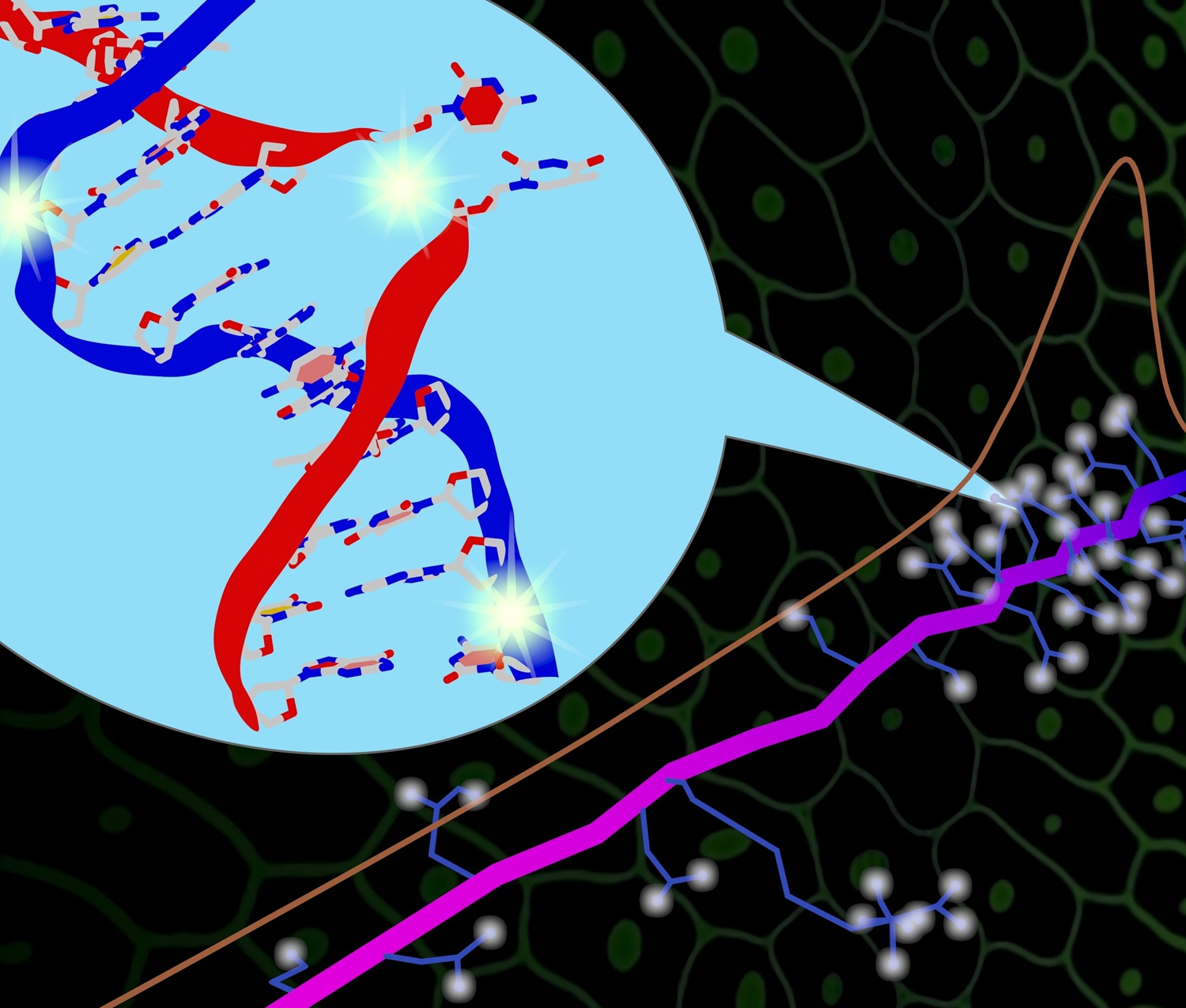
The Doctoral Network (DN) project MS-RADAM will deliver a state-of-the-art research programme that will pioneer a new approach to reveal key nano- and larger-scale radiation biodamage phenomena based on multiscale modelling (MM) and its thorough validation using advanced experimental techniques and technological applications. In particular, the MS-RADAM research programme will focus on obtaining an advanced understanding of Radiation Damage (RADAM) phenomena induced by ion irradiation in biomolecular and biological systems relevant to the application of this knowledge in particle therapy and many other relevant areas of research and technology. To initiate such a programme and to provide the industry, radiotherapy research community and many other related communities with a cohort of skilled researchers, MS-RADAM DN will train 14 Doctoral Candidates (DCs) in the methodology and skills needed for this emerging area of research and technology. MS-RADAM DN contains leading academic and industrial partners with the necessary experience to provide the international, interdisciplinary and intersectoral training needed for the MS-RADAM research programme, whilst also providing the DCs a unique opportunity to gain comprehensive training in the complementary and entrepreneurial skills for their further career development. Further information about the MS-RADAM DN project can be found here.
-
 Horizon Europe EIC-Pathfinder "Emerging technologies for crystal-based gamma-ray light sources" (TECHNO-CLS), 2022-2027
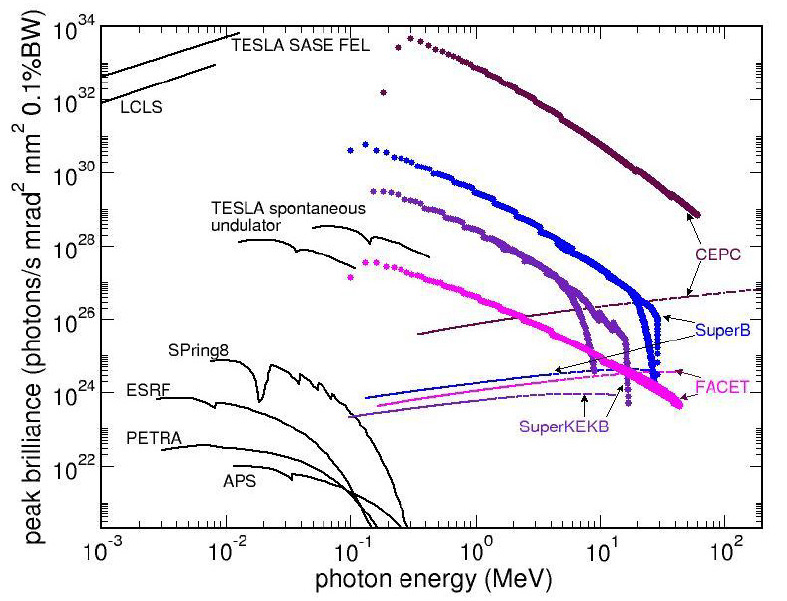
TECHNO-CLS aims at the breakthrough in technologies needed for designing and practical realisation of novel gamma-ray Light Sources (LS) operating at photon energies from 100 keV up to GeV range that can be constructed through exposure of oriented crystals (linear, bent and periodically bent) to the beams of ultra-relativistic charged particles. The TECHNO-CLS high-risk/high-gain science-towards-technology breakthrough research programme will address the physics of the processes accompanying the oriented crystal exposure to irradiation by the high-energy electron and positron beams at the atomistic level of detail needed for the realisation of the TECHNO-CLS goals. TECHNO-CLS aims at the practical realisation of novel gamma-ray LSs, such as crystalline channelling radiation emitters, crystalline synchrotron radiation emitters, crystalline undulators, and others that generate radiation with wavelengths orders of magnitude less than 1 Angstrom, i.e. within the range that cannot be reached in existing LSs based on magnetic undulators. Such LSs will have many applications in the basic sciences, including nuclear and solid-state physics and the life sciences. Theoretical, computational, experimental and technological results obtained in the course of this project will pave the way for key technological developments of the LSs and their wider exploitation. Further information about the TECHNO-CLS project can be found here.
-
 COST Innovators Grant (CIG) IG20129 "INnovative DIgital COntrol for 3D Nanoprinting" (INDICO), 2025-2026
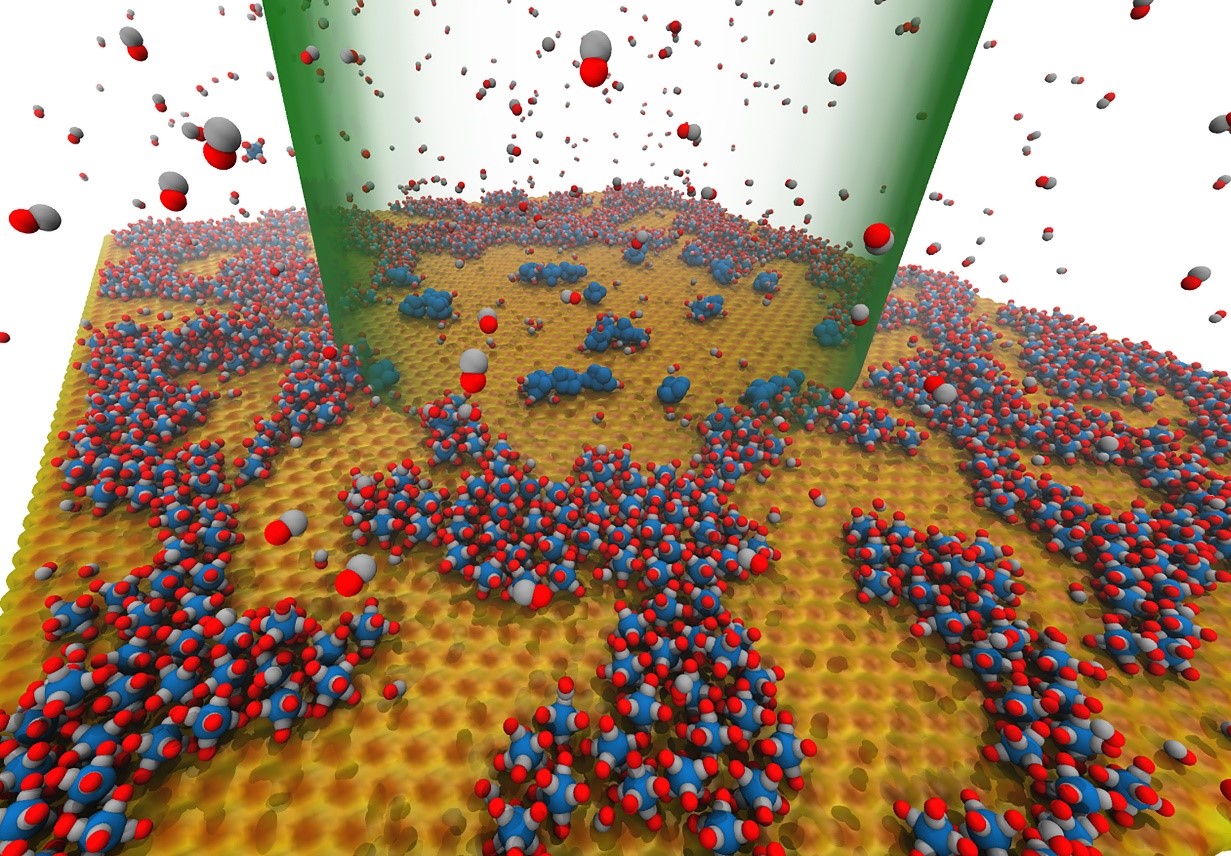
In recent years, significant advances in 3D nanofabrication have been made through the combination of experimental studies, technological development and computational modelling. An important milestone towards controlled 3D nanofabrication has been the development of pattern-generation software tools that navigate the electron beam of an electron microscope to produce 3D nanostructures with predefined target geometries. A recent breakthrough within the COST Action CA20129 MultIChem concerns the practical realisation of computational Multiscale Modelling (MM) of Focused Electron/Ion Beam Induced Deposition (FEBID, FIBID) processes at the spatial and temporal scales relevant to the needs of 3D nanofabrication. The CIG project INDICO aims to develop an INnovative tool for DIgital COntrol for 3D nanoprinting, which will provide the functional link between the pattern generation software currently used for FEBID & FIBID and MM-based knowledge of these processes in order to allow the controlled computer-guided 3D nanoprinting and to demonstrate the potential of this technology for the fabrication of nanostructures with specific properties. Further information about the CIG INDICO project can be found here.
-
 H2020-MSCA-RISE Project "Novel Light Sources: Theory and Experiment" (N-LIGHT), 2020-2026
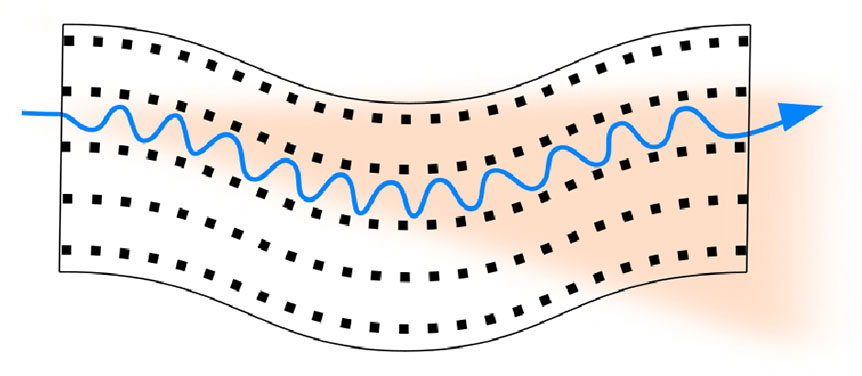
The N-LIGHT project suggests an interdisciplinary research programme that will provide the breakthrough needed in theory and experiment to design and deliver the practical realisation of novel gamma-ray Light Sources (LS) operating at photon energies from ~100 keV up to GeV range that can be constructed through exposure of oriented crystals (linear, bent and periodically bent) to the beams of ultrarelativistic charged particles. The N-LIGHT research and technological programme will address the physics of the processes accompanying the oriented crystal exposure to irradiation by the beams at the atomistic level of detail needed for the realisation of the N-LIGHT goals. Further information about the N-LIGHT project can be found here.
- Completed projects